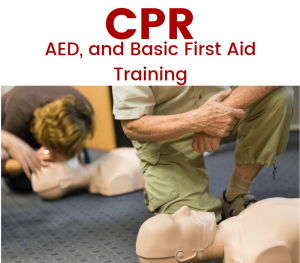
CPR Programs

Cardiopulmonary resuscitation (CPR) is an emergency procedure which is performed in an effort to manually preserve intact brain function until further measures are taken to restore spontaneous blood circulation and breathing in a person in cardiac arrest. It is indicated in those who are unresponsive with no breathing or abnormal breathing, for example agonal respirations. It may be performed both in and outside of a hospital.

CPR involves chest compressions at least 2 inches deep and at a rate of at least 100 per minute in an effort to create artificial circulation by manually pumping blood through the heart. In addition, the rescuer may provide breaths by either exhaling into the subject’s mouth or nose or utilizing a device that pushes air into the subject’s lungs. This process of externally providing ventilation is termed artificial respiration. Current recommendations place emphasis on high-quality chest compressions over artificial respiration; a simplified CPR method involving chest compressions only is recommended for untrained rescuers.

CPR Chest Compressions

CPR alone is unlikely to restart the heart; its main purpose is to restore partial flow of oxygenated blood to the brain and heart. The objective is to delay tissue death and to extend the brief window of opportunity for a successful resuscitation without permanent brain damage. Administration of an electric shock to the subject’s heart, termed defibrillation, is usually needed in order to restore a viable or “perfusing” heart rhythm. Defibrillation is only effective for certain heart rhythms, namely ventricular fibrillation or pulseless ventricular tachycardia, rather than asystole or pulseless electrical activity. CPR may succeed in inducing a heart rhythm which may be shockable. CPR is generally continued until the subject regains return of spontaneous circulation (ROSC) or is declared dead.

CPR PROGRAMS

BLS – CPR PRO for the Professional Rescuer

CPR and AED

CPR, AED, and Basic First Aid

Pediatric First Aid, CPR and AED


Contact us

for additional information

or call (208) 991-2770

to Schedule Training 


Leave a Reply

%d bloggers like this: